
Art Wounds (available in audio)
When the truest part of yourself becomes a battleground.

Listen to me read this post:
-
You can’t fight what you can’t name.
I had the good luck to stumble across Andrea Scher’s blog when I was a young teenager hungry for more. More color, more whimsy, more delicious CREATIVITY.
Her blog was one of those pivotal resources you encounter as a young adult that uncovers and ignites your hopes and dreams. Something with powerful internal resonance that shows you how it’s possible to BE in the future, and sets you on a path toward creating or discovering that magic for yourself.
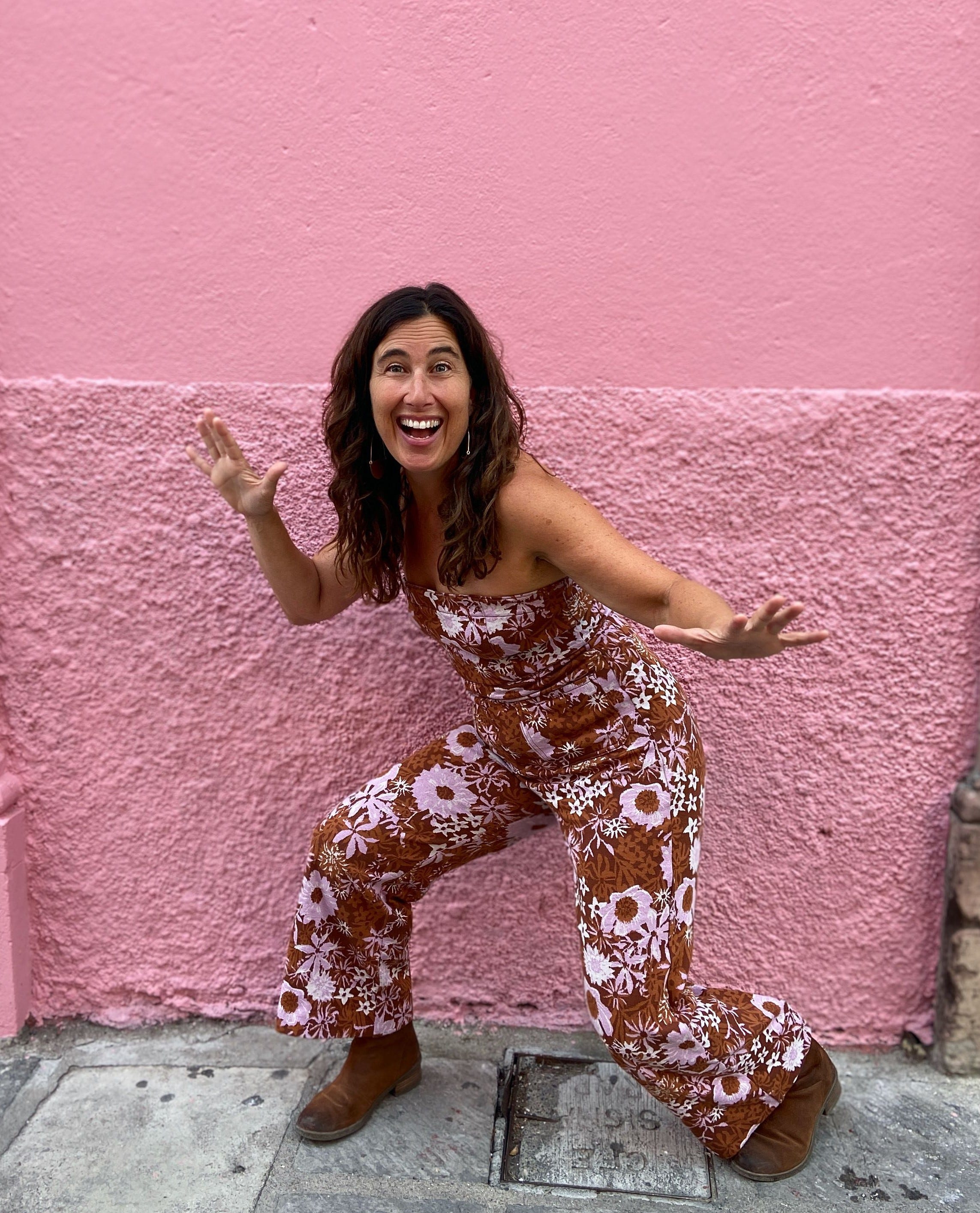
(And we finally met! I took this picture of Andrea in October 2022 at a wild writing retreat she co-hosted with Laurie Wagner in San Miguel de Allende!)
But it wasn’t until May of 2020 (possibly 15 years or more since I’d started following her!) that one of Andrea’s blog posts mentioned something that cracked me wide open:
Art wounds.
And the pain I’d been dragging around and become nearly suicidal over finally had a name.
“Once you can name something, you’re conscious of it. You have power over it. You’re in control. You own it.”
-Robin P. Williams
Creativity is the native state and ancestral inheritance of humanity. We are born creative. We must express our creativity, or suffer. And when we undergo trauma that attacks our right to create, or feel the inherent joyfulness of it, or use it solely for self-pleasure, or remix and build on top of an existing concept, then some innate, integral, vital part of ourselves is harmed.
“To even call somebody “a creative person” is almost laughably redundant; creativity is the hallmark of our species. We have the senses for it; we have the curiosity for it; we have the opposable thumbs for it; we have the rhythm for it; we have the language and the excitement and the innate connection to divinity for it.”
-Big Magic by Elizabeth Gilbert
Call it the heart, the soul, the psyche — when our creative self is wounded, it infects all areas of our life.
"...A woman's creative ability is her most valuable asset, for it gives outwardly and feeds her inwardly at every level: psychic, spiritual, mental, emotive, and economic...As we create, this wild and mysterious being is creating us in return, filling us with love." -Women Who Run with the Wolves by Clarissa Pinkola Estés
The art wound that Andrea shared was eerily similar to the start of my own.
Once upon a time, someone I called a close friend accused me of purposefully copying her writing ideas.
Never mind that the ‘ideas’ referenced were topical (she wanted to write a YA zombie book about a girl in a big city with a little brother, and I actually wrote one about a girl trapped in a high school trying to get to her little brother. She had written a YA High Fantasy fairytale retelling, and I wanted to turn that same super-common fairytale into an MG Steampunk retelling. One of her (at the time) unpublished book titles had a popular cadence that one of my titles came to resemble after a request from my agent).
Never mind that I could directly trace my inspiration for each idea back to a source separate from this ‘friend’. Never mind that she hadn’t actually read any of the materials in question.
She hit me with the accusation. She threatened to sue me for intellectual property infringement, and as she was from a wealthy family with legal connections, she could no doubt make good on her threat. I had to disclose this to my literary agent, who rightfully pointed out that she and I were of a same age and fantasy disposition, and our subconsciousnesses were no doubt seeded with the same popular media influences. I had to talk to an attorney, who assured me that in an actual court case the differences in our actual materials would exonerate me, and you can’t sue someone over an unexecuted idea.
I was outraged. I was hurt. It made me paranoid that all my friends would resent me for any similarity to them I developed in any aspect of life.
It’s hard to describe the depths of how much this accusation impacted me. For many years it was the worst emotional experience of my life. Worse than my fiancé breaking off our engagement out of the blue. Worse than cutting off a family member after years of abuse and bad behavior. Worse than dragging myself through the doldrums of depression.
Here’s the rub — the reason it hurt so deeply wasn’t the accusation itself, or even the potential financial impact from the legal threats. It was how my entire system reacted — blaming myself even though I did nothing wrong, isolating from others to prevent future harm, and worst of all: developing unconscious internal Rules:
I must never, ever make art that references anything other than what I produce inside myself.
I must not create characters or plots similar to any I have read before.
I must not draw a single line referenced from any model or example.
I must. Not.
Be InspiredCopy.
But copying is not the same as inspiration. Referencing is not the same as tracing to steal. And for the record, everything is remixed in the subconscious cauldron of creativity. Just because someone can’t (or won’t) identify the ingredients that went into their soup doesn’t make their inspiration more ‘organic’ than someone who can identify familiar shapes floating in the broth.
But in my pain and confusion I decided the safest, most authentic way for me to create is if I didn’t use anything I could directly relate back to something I remembered and liked from someone else’s ideas.
Is it any wonder that over the next few years my engagement and satisfaction with my writing tanked?
I would leave work on my lunch break, drive to the closest café, fuel up on espresso, and work as hard as I could during that precious time. And at first these visits were a haven where I could be my ‘real self’, not the tightly-laced professional my day-job required. But once I no longer allowed myself to engage in the natural cycle of creativity (absorbing outside ideas, remixing internally, then pouring into the world again) the practice became a resentful slog. And the words? Dead, dead, dead.
It was agony. My very identity was crumbling. And the less I was capable of writing, the more I resented myself for it.
And here’s another subtle trap, which was also my next art wound: the golden calf of Productivity.
“Over the last few years we have fallen victim to what is now being called “Hustle Culture.” By hustle culture, I mean the collective urge we currently seem to feel as a society to work harder, stronger, faster. To grind ourselves at our maximum capacity, every day, and accomplish our goals and dreams at an accelerated speed that matches the digital world we’ve built around ourselves.”
- Amira Khanifah for The Good Men Project
Let me tell you another story:
Once upon a time I roomed with two other writers to attend a wedding. One of these writers had made a vow to herself (inspired, I believe, by an author she admired) to write 500 words per day, every day, no excuses, no exceptions. Even the day we attended the wedding, she was up early trying to hit that word count.
At the time I was aghast. “Why would you do that?” I asked her.
Her response is burned into my memory. The wide eyes, the defensive—almost confrontational—tone. “Because I want to get published.”
Well hell, so did I! But writing 500 words every day seemed difficult to impossible. Especially with how I was writing back then: in and around working full time and attending college part-time, mostly cranking out words on weekend mornings when I had the most energy (undiagnosed ADHD for the win). It’s worth noting this particular writer was not working at the time, supported by family in the hopes she could actually hit that dream goal.
And sure enough, she went on to acquire a publishing contract within the year, and I… did not. Still haven’t, and that was more than 10 years ago.
I’ve thought about this exchange many times over the years. Was the reason she ‘made it’ and I haven’t simply her dogged dedication? Had she ‘earned’ publication through her discipline? Did I even deserve publication if I couldn’t be bothered to put 500 words a day toward something I claimed was *sarcastic voice* soooo important to me?
“Real writers write every day.”
It was a popular refrain back in the 2010s, and I wish I could strike it from the memory of the universe.
You know what real writers do every day? Survive their goddamn lives.
Writers are people, with some combination of responsibilities and obligations. Working, schooling, parenting, exercising, cooking, cleaning, going to therapy, commuting an hour each way, caretaking a loved one, maintaining friendships, maintaining relationships, paying bills, I could go on.
And those are just external factors. Consider the internal factors, and the famous spoons analogy. Mental illness. Physical illness. Disability. Neuro-atypicality. Depression. Anxiety. Exhaustion.
So for anyone, especially a full-time writer (referring not to this acquaintance but whichever false prophet inspired her) to come along and tell people that if they can’t write a measly 500 words a day then they don’t deserve to call themselves a writer is… Such an insensitive, out-of-touch, asshole move.
But the concept of ‘grinding’ still insidiously infiltrates writing communities today. Word count trackers, calendar trackers, the sticker method, 5am Writer’s Club, etc.
(To be clear, these things are all FINE in and of themselves, and if one of these methods helped you make time for creativity, or motivate you to stay consistent, that’s awesome! I’m speaking about the theme in the zeitgeist that uses productivity as the only measure that really matters, sometimes at the expense of wellness and creative joy, leading to burnout long-term.)
There’s so much I could say about the toxicity of hustle culture and how our society literally isn’t set up to benefit natural human needs and cycles so expecting ourselves to Do All The Things is an exercise in insanity, but let’s tackle that another time.
My art wound surrounding productivity was born from prioritizing time spent and word count over quality. But even the pursuit of ‘quality’ is just another mask that productivity wears. The true poison came from valuing production at any cost over the joy and satisfaction that used to be inherent in making those words.
What used to be my favorite thing to do was now the most painful. Opening my draft felt like plunging into a fighting arena with a hundred opponents already warmed up and ready to take me out. Or like wandering a maze lined with broken glass and spiked walls. Or trying to concentrate in a room full of people yelling insults at me.
The year was 2018, and I was in the worst of a depression that burbled up from family genetics. I was also coping with PTSD and flashbacks from a traumatic incident I’ll probably talk about later (not assault). My husband-at-the-time and I were living in a castle-like dream house, but it was an hour from friends or family, and the commute and isolation were killing our health and relationship.
It was… a dark time.
The days ground forward. We sold that house and moved back to town. Pandemic isolation in 2020 was super lovely and healing at first. I was back in a house and neighborhood I loved, walking my dogs through the beautiful spring, saved from the daily slog of commuting to an office where my introvert and autism spectrum sensitivities were constantly over-stimulated.
I gave up on my identity as a writer. I pursued things that brought me joy instead of feeding the monster that howled for more, more, more accomplishment. I taught myself Illustrator, and started to draw a webcomic.
Then Andrea’s post came, in May of 2020. And so many of my struggles over the previous years were suddenly clearly defined and labeled:
Art Wounds.
Fast-forward through a divorce, and I met my friend Steve, who is a professional graphics artist. Steve taught me the truth behind professional artists: everything is remixed from everything else, and while you obviously can’t copy and paste someone’s work as your own, referencing an example isn’t bad, it’s just good sense! Even tracing from an example and converting the lines to your own style isn’t theft—it’s fucking ART.
(That word tracing has a heavy connotation, see the end of this post for an example of what I’m talking about.)
With a label for my struggles, and supportive friends willing to help me detangle the unconscious Rules I was restricting myself with, those art wounds started to heal.
They will never be fully healed. Just as we will never fully learn a life lesson or never fully outgrow the impact of a trauma. But that’s not the point.
The point of life is to keep learning those lessons, to learn them more fully, or with more nuance. To keep walking the journey, to practice, to do the sacred work over again with each cycle.
Art wounds punch holes in our heart that must be mended, but that also let in the light. A weakness teaches you how to build strength against it. It teaches you more about the depths of your self.
I know so much more about my self, my creative cycles, and my creative needs, as a result of going through that nightmare, deconstructing my rotten tower, and rebuilding with a more solid foundation. God, I would never want to go through it again, but on the other side I can view the journey with gratitude.
This tale has gone on long enough, so I’ll wrap it up. We’ll talk about how to heal art wounds next time. Until then, if you have an art wound you want to share in the comments, please do. If you’ve healed an art wound, please share how you did it, and the wisdom you carry from the process.
I hope even just knowing about art wounds now can help you see something inside yourself that was maybe previously nameless and formless.
Until next time,
Savannah
Tracing: there is nuance to this label. A few articles that go over the major points behind the concept of tracing:
When I first started making my comic, I felt terrible if I was even using a reference picture. My friend Steve quickly disabused me of that notion. ALL artists reference!
Tracing is a thornier issue. If you trace the entirety of someone else’s work and pass it off as your own, especially for profit, that is obviously immoral and wrong.
But what about tracing elements? Or tracing a general shape then modifying it according to your own artistic sensibilities to fit your own piece?
Let me show you a few examples from my own work, and you can tell me if I’m acting like a real artist or unethically stealing the work of others:
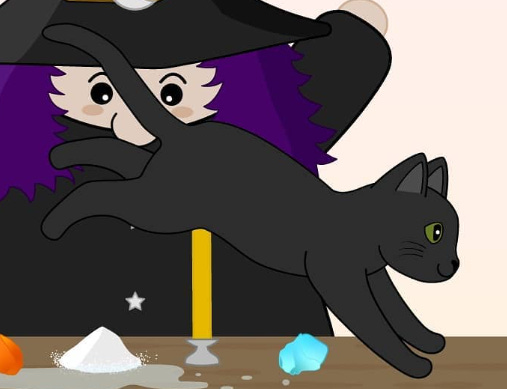
Here is part of a panel of Pickles and Pitch where I needed to draw Magpie’s cat Boop running across the table where she was performing a spell:
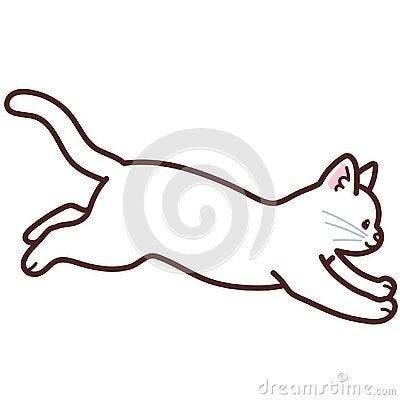
And here is the reference image I found online to help me draw Boop for this panel:
If I recall my process, I did trace part of the reference cat’s body for proportionality, but due to the nature of Illustrator the lines didn’t end up showing as an exact trace. Here’s a couple overlays of the images together:
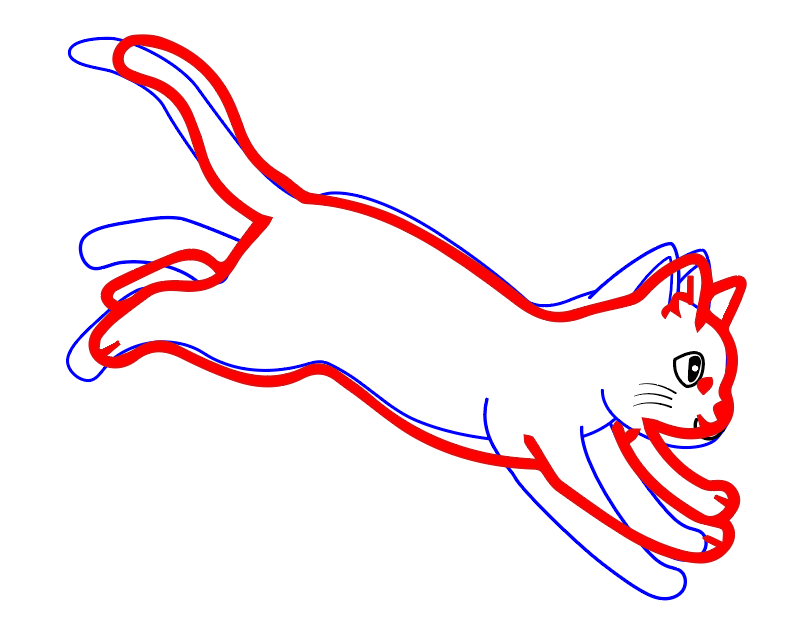
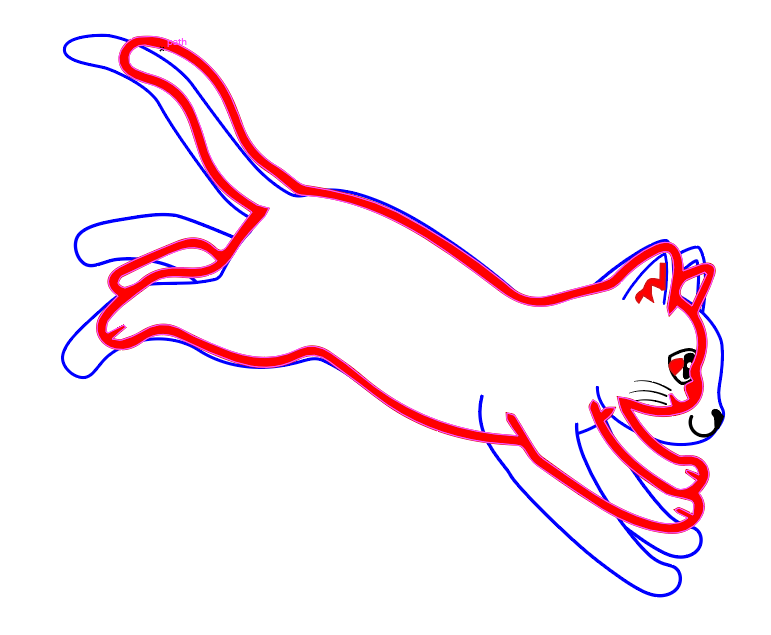
As you can see, there are some surface line similarities, but in modifying the basic shapes for my needs it became something different, something unique.
Here’s another example:
One of the first Illustrator projects I completed (which was in hindsight way too ambitious, lol) was this piece called Depression:
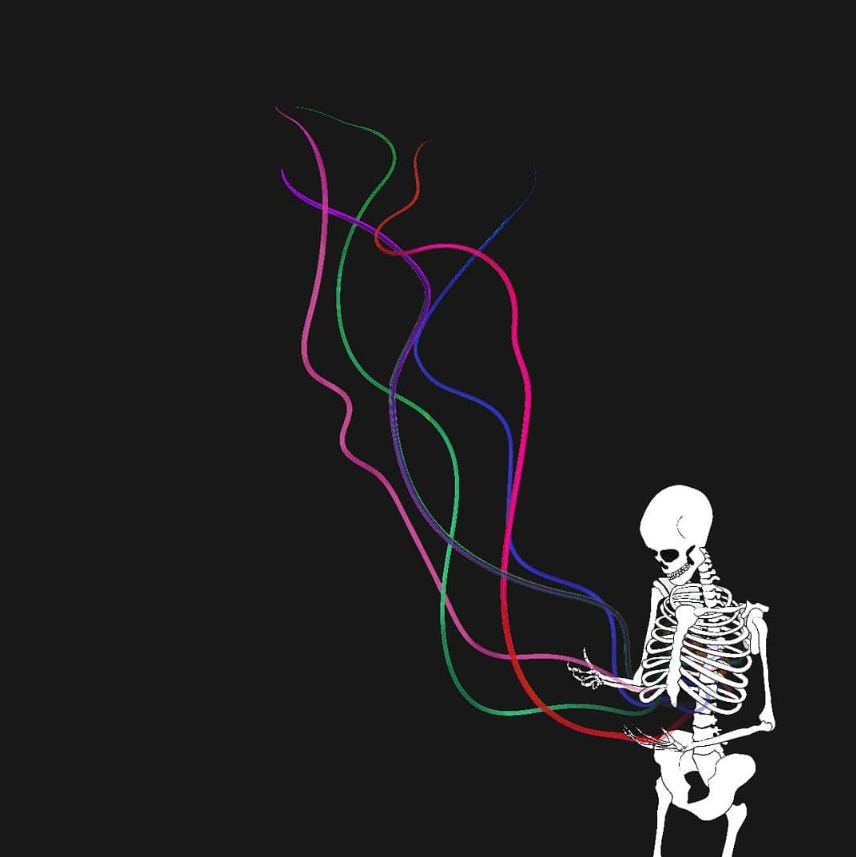
For the model, I used a website called Kineman where I was able to virtually pose a skeleton:
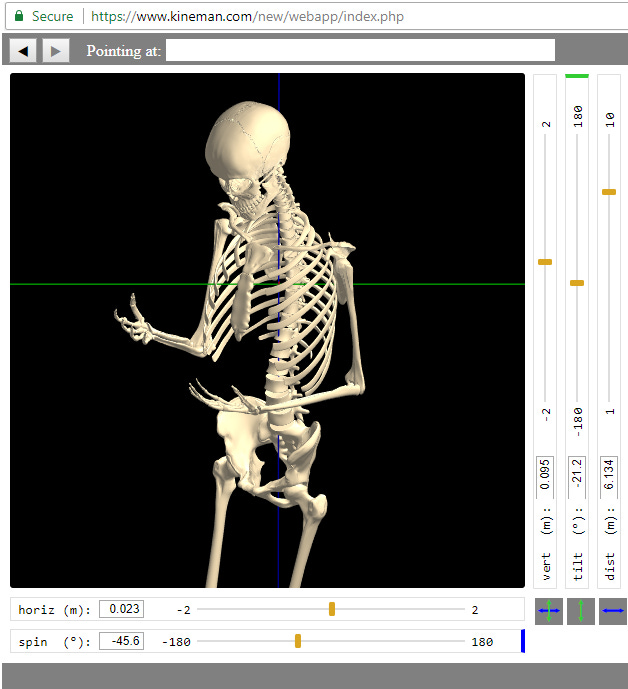
I pulled this image into Photoshop and Illustrator to simplify the shapes and give me something to trace in Illustrator. Here’s what that looked like:
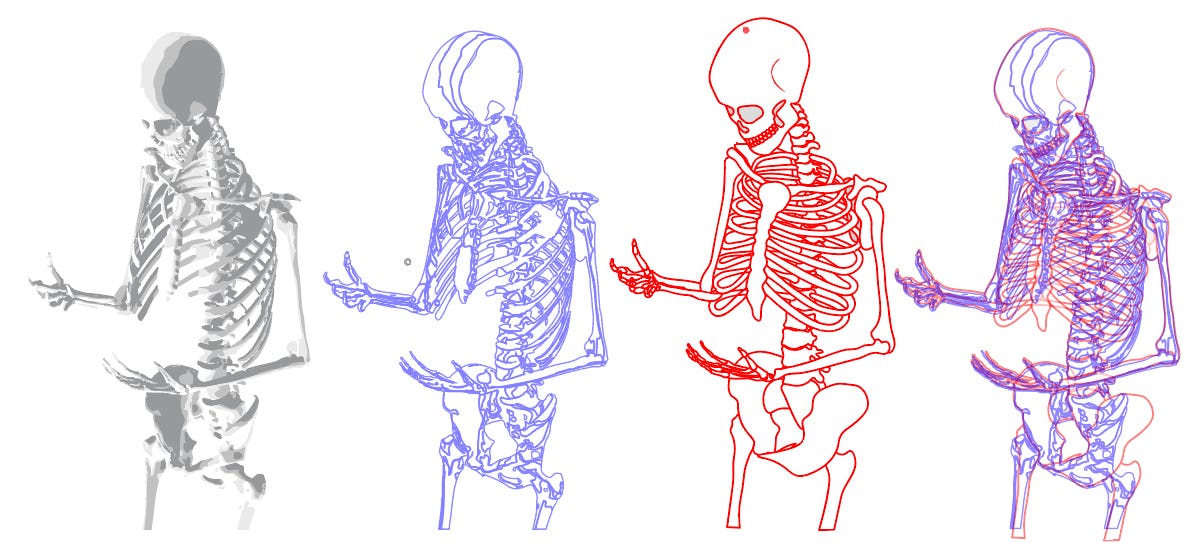
From left to right, the 1st skeleton is a model directly pulled from the website with some appearance editing to simplify the shapes. The 2nd blue skeleton is an image of those shapes converted to only lines in Illustrator. The 3rd red skeleton is my ‘final product’ that was traced over the blue lines. The 4th skeleton overlays the blue and red skeleton to show you what my ‘trace’ copy looks like against the original line copy.
And here’s a close up:
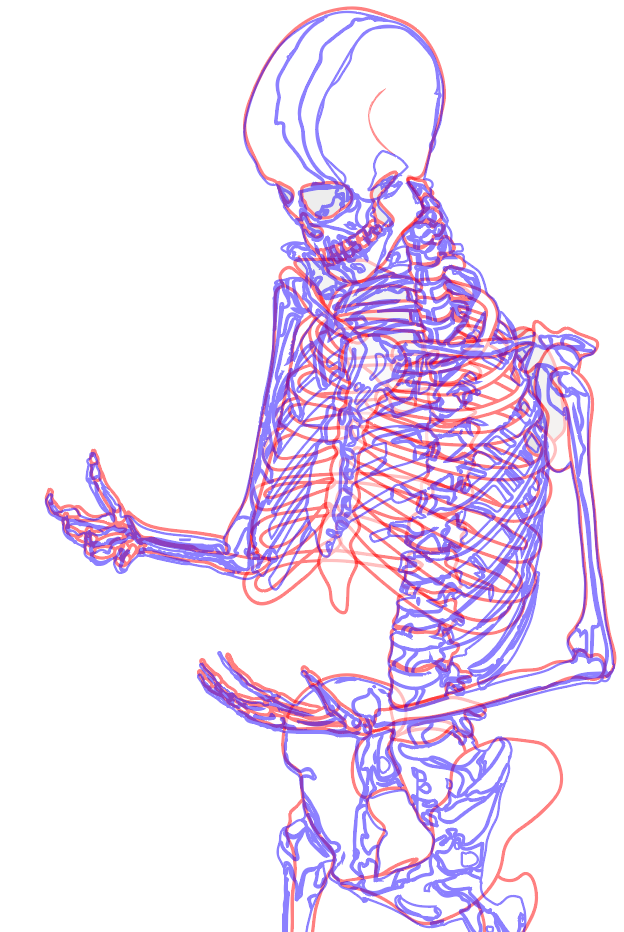
As you can see, there are significant differences between the original model and my final skeleton, most notably in the ribs and hips.
But even where there’s a lot of similarity, like in the skull, the lines are still different. Even my ‘trace’ of the skull resulted in different lines from the original.
I remember getting to read some of your sleeping beauty retell and while it of course has a reference story (obviously lol) it was also so completely and wholly yours. I think about it frequently (I want to read moooore)
I also remember back then, the whole right 500 words a day thing. While going to college more than full time, and also working full-time. And that I felt like such a failure because I couldn't manage 500 words a day everyday. Now I realize how wrong that was. That there is a different path for everyone and there shouldn't have been so much pressure to do that.
I'm so glad that you have found happiness, that you have learned to also care about yourself. You are amazing and I am seriously SO PUMPED to read whatever comes next!
That first person was beyond cruel. I've said it before and I'll say it again, I am truly sorry you went through all this, Sav. It's too much for anyone. You are one of the humblest people I have ever met. So happy to see you posting about your incredible journey, though. Always the biggest inspiration to me. Lots of love xx